


How to Increase Profit Margin in a Supermarket Business


Running a supermarket may look simple, but maintaining good profits is a real challenge. With rising competition, price wars, and increasing costs, many store owners struggle to earn steady returns. If you are looking for practical ways to increase profit margin in a supermarket business, this guide will help you understand proven strategies that are easy to apply and highly effective.
Understanding Profit Margin in a Supermarket
Profit margin is the amount you earn after covering all costs like purchasing, rent, staff salary, and utilities. In the supermarket business, margins are usually low, but the volume of sales is high. That’s why even small improvements can make a big difference in your overall profit.
Why Improving Profit Margin is Important
Improving profit margin helps you:
Grow your supermarket business faster
Handle market competition easily
Invest in better products and services
Build long-term financial stability
Now let’s explore how to increase profit margin in a supermarket business step by step.
Ways to Increase Profit Margin in a Supermarket Business
1. Use Smart Pricing Techniques
Pricing plays a key role in profitability. A small change in price can increase your profit without affecting sales.
Practical Pricing Tips
Use pricing like ₹99 instead of ₹100
Slightly increase prices on daily-use items
Avoid unnecessary discounts
Monitor competitor pricing regularly
Smart pricing helps you stay competitive while improving margins.
2. Focus on High-Profit Products
Not every product gives the same return. Some items offer higher margins than others.
What You Should Do
Identify high-margin products
Place them at eye level on shelves
Promote them through offers and displays
Reduce low-margin and slow-moving items
This simple step can quickly improve your overall profitability.
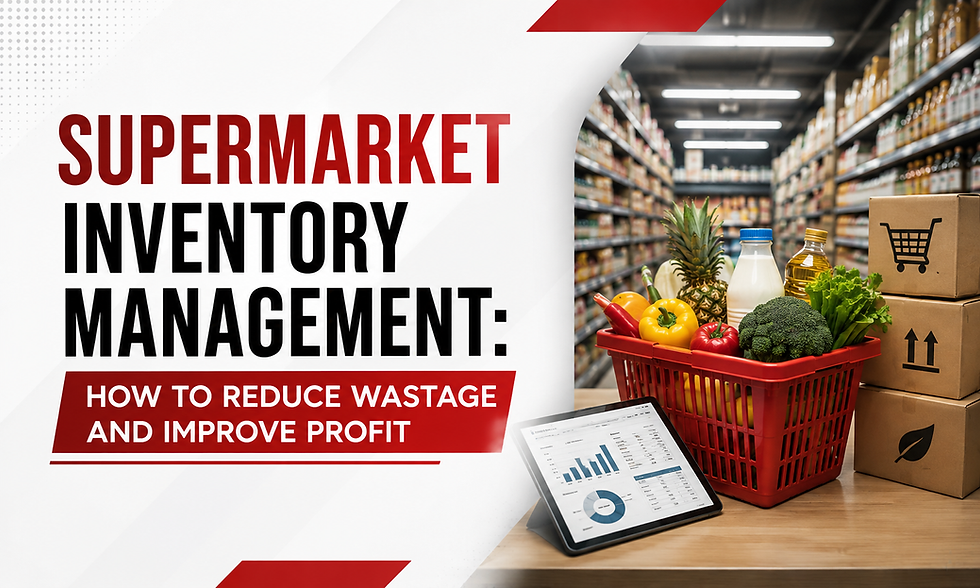
3. Improve Inventory Management
Inventory mistakes can lead to loss, wastage, and blocked money.
Best Practices
Track fast and slow-moving products
Avoid overstocking
Maintain proper stock levels
Use simple inventory software
Efficient inventory management is one of the most important ways to improve profit margin in a supermarket business.
4. Reduce Unnecessary Expenses
Controlling costs is just as important as increasing sales.
Ways to Cut Costs
Save electricity with energy-efficient lights
Optimize staff shifts
Negotiate better supplier deals
Reduce packaging and handling costs
Lower expenses directly increase your profit margin.
5. Increase Average Bill Value
Instead of only focusing on more customers, try to increase how much each customer spends.
Easy Techniques
Offer combo deals
Suggest related products
Provide bundle discounts
Use attractive product displays
For example, placing snacks near beverages can increase impulse buying.
6. Build Customer Loyalty
Loyal customers visit more often and spend more.
How to Retain Customers
Offer loyalty points or rewards
Provide friendly customer service
Maintain product quality
Give special discounts to regular customers
Customer retention is a powerful strategy for long-term profit growth.
7. Introduce Private Label Products
Selling your own branded products can significantly improve profit margins.
Benefits of Private Labels
Higher profit compared to branded products
Better control over pricing
Builds customer trust in your store
This is an advanced but highly effective strategy.
8. Use Technology to Improve Efficiency
Technology helps reduce errors and improve decision-making.
Tools to Use
Billing and POS systems
Inventory management software
Sales tracking tools
Data analytics
Using technology is a smart step to improve profit margin in a supermarket business.
9. Optimize Store Layout
Your store layout can directly influence customer buying behavior.
Layout Tips
Keep essential items at the back
Place high-margin items in visible areas
Use clean and organized shelves
Add clear signs and sections
A well-designed store encourages customers to buy more.
10. Reduce Product Wastage
Wastage, especially in perishable items, reduces your profit.
How to Minimize Waste
Monitor expiry dates regularly
Offer discounts on near-expiry items
Store products properly
Order stock carefully
Reducing waste means saving money and increasing efficiency.
11. Analyze Sales Data Regularly
Data helps you understand what is working and what is not.
What to Track
Best-selling products
Low-performing items
Customer preferences
Seasonal trends
Making decisions based on data improves profitability over time.
Also Read This : How to Start A Supermarket Franchise In India
Common Mistakes to Avoid
Many supermarket owners lose profit due to simple mistakes:
Giving too many discounts
Poor stock management
Ignoring customer experience
Not tracking expenses
Keeping too many low-margin products
Avoiding these mistakes is equally important when trying to improve profit margin in a supermarket business.
Retail Way – Expert Help for Supermarket Growth
Growing a supermarket business requires the right planning, smart execution, and expert guidance. Many business owners face challenges like poor planning, low margins, and inefficient store setup. This is where professional support becomes important. Retail Way provides supermarket franchise opportunities along with complete business support, making it easier for new entrepreneurs to start with a proven and profitable model.
What Retail Way Offers
Retail Way provides complete support for:
Supermarket setup and business planning
Modern and profit-focused store layout design
Product selection and inventory strategy
Profit improvement and cost control techniques
Staff training and operational support
Benefits of Choosing a Franchise Model
Ready business setup with expert guidance
Lower risk compared to starting from scratch
Proven business strategies
Faster growth and better profit potential
Conclusion
Understanding how to increase profit margin in a supermarket business is not about making one big change overnight. It’s about taking small, smart steps consistently and improving your daily operations.
When you focus on the right areas—like pricing products wisely, managing inventory efficiently, controlling unnecessary costs, and delivering a better shopping experience—you start building a stronger and more profitable business.
Success in a supermarket business comes from balance. You need to reduce waste, increase sales value, and keep your customers happy at the same time. Even simple improvements, when applied regularly, can create a big impact on your overall profit.
Start implementing these strategies step by step. Track what works best for your store, make adjustments, and keep improving. With the right approach and consistency, your supermarket can achieve steady growth, higher profit margins, and long-term success.


Comments